Crypto Payment Trends in 2026: What E-commerce Must Know

For many ambitious e-commerce entrepreneurs, high payment processing fees and slow cross-border settlement have become persistent obstacles to global growth. As traditional finance evolves to meet digital competition, the shift to cryptocurrency payments is reshaping how businesses handle transactions and support customers. By embracing blockchain-powered digital payments and leveraging stablecoins for near-instant settlements, merchants in every country can minimize costs, improve transaction speed, and build a more secure, transparent foundation for online commerce.
Table of Contents
- Core Concepts Of Crypto Payments In 2026
- Major Crypto Payment Types And Technologies
- Stablecoins And Instant Crypto-Fiat Settlement
- Compliance, Security, And Legal Changes
- Reducing Transaction Costs With Automation
- Risks, Costs, And Best Practices For Merchants
Key Takeaways
| Point | Details |
|---|---|
| Evolving Crypto Infrastructure | By 2026, cryptocurrency payments will transform into a robust financial ecosystem, utilizing technologies like Blockchain and smart contracts for improved transaction efficiency. |
| Stablecoins as Payment Solutions | Stablecoins will play a crucial role in reducing transaction costs and volatility, making them ideal for everyday commerce and cross-border payments. |
| Compliance and Security Focus | Strong regulatory frameworks will emerge, emphasizing compliance measures like AML and KYC to protect consumer interests and ensure transaction integrity. |
| Automation for Cost Efficiency | Automation technologies will minimize operational costs in crypto transactions, allowing businesses to streamline payment processes and reduce financial overhead. |
Core Concepts of Crypto Payments in 2026
Cryptocurrency payments are rapidly transforming digital transactions, moving far beyond the initial speculative investment phase into a practical financial infrastructure. By 2026, these digital payment systems will leverage distributed ledger technologies to revolutionize how businesses and consumers exchange value globally. Crypto tokenisation and payment strategies have evolved to address critical challenges in traditional financial systems.
At the core of crypto payments are several fundamental technologies that enable secure, transparent, and efficient transactions. Blockchain serves as the foundational infrastructure, providing a decentralized and immutable record of all financial exchanges. Cryptographic protocols ensure transaction security, while smart contracts automate complex payment processes without intermediary institutions. These technologies work together to create a payment ecosystem that can process transactions faster and more cost-effectively than traditional banking systems.
The emergence of stablecoins represents a critical development in crypto payments for 2026. Unlike volatile cryptocurrencies, stablecoins maintain a consistent value by being pegged to traditional currencies or assets, making them more attractive for everyday commercial transactions. E-commerce platforms can leverage these digital assets to reduce transaction fees, minimize currency conversion costs, and enable instant cross-border payments. Financial institutions are increasingly recognizing the potential of these digital currencies as a bridge between traditional and digital financial systems.
Pro tip: When integrating crypto payments, prioritize platforms offering multi-currency support and robust security protocols to minimize transaction risks and maximize financial flexibility.
Major Crypto Payment Types and Technologies
The landscape of digital payments has dramatically evolved, with cryptocurrency payment technologies offering unprecedented flexibility and innovation for e-commerce platforms. By 2026, multiple distinct crypto payment types have emerged, each addressing specific transactional needs and market requirements. These technologies range from traditional blockchain-based cryptocurrencies to more advanced, specialized payment solutions that prioritize speed, security, and global accessibility.
Four primary crypto payment technologies dominate the market: Native Blockchain Currencies, Stablecoins, Utility Tokens, and Payment Tokens. Native blockchain currencies like Bitcoin and Ethereum continue to serve as foundational digital assets, enabling direct peer-to-peer transactions without intermediary financial institutions. Stablecoins provide price stability by maintaining a consistent value relative to traditional currencies, making them particularly attractive for commercial transactions. Utility tokens represent access rights to specific platforms or services, while payment tokens focus specifically on facilitating seamless financial exchanges across different digital ecosystems.
The technical infrastructure supporting these payment technologies relies heavily on smart contract capabilities, which automate and secure transaction processes. Advanced blockchain protocols now enable near-instantaneous cross-border payments, dramatically reducing transaction costs and eliminating traditional banking delays. E-commerce platforms can leverage these technologies to create more efficient, transparent, and cost-effective payment systems that transcend geographical and institutional limitations. The integration of advanced cryptographic techniques ensures robust security measures, protecting both merchants and consumers from potential fraudulent activities.
Here’s how the main crypto payment technologies differ in purpose and business benefits:
| Technology Type | Key Purpose | Example Use Case | Business Impact |
|---|---|---|---|
| Native Blockchain Currency | Peer-to-peer value transfer | Accepting Bitcoin for purchases | Increases settlement transparency |
| Stablecoin | Mitigates value volatility | Instant cross-border e-payments | Reduces FX and processing costs |
| Utility Token | Grants access to platform services | Paying for API or storage usage | Enables new revenue models |
| Payment Token | Optimizes transactions in digital ecosystems | Integrated checkout in dApps | Enhances customer payment options |
Pro tip: Research and select crypto payment technologies that offer robust multi-signature wallet support and comprehensive transaction tracking capabilities to maximize security and operational transparency.
Stablecoins and Instant Crypto-Fiat Settlement
The financial landscape is experiencing a revolutionary transformation with stablecoins as digital cash settlement mechanisms, fundamentally reshaping how global transactions are processed. By 2026, these digital assets have emerged as critical infrastructure for cross-border payments, offering unprecedented speed and reliability. Stablecoins represent a sophisticated bridge between traditional financial systems and the digital economy, providing merchants and institutions with flexible, instantaneous settlement options that transcend geographic and regulatory boundaries.

Two primary types of stablecoins dominate the market: Fiat-Collateralized Stablecoins and Algorithmic Stablecoins. Fiat-collateralized versions maintain a direct 1:1 relationship with traditional currencies like US Dollars, ensuring price stability through actual cash reserves. Algorithmic stablecoins, conversely, use complex mathematical protocols to maintain value consistency, dynamically adjusting token supply based on market demand. Both models enable near-instantaneous crypto-to-fiat conversions, dramatically reducing transaction times from days to mere seconds and eliminating traditional banking intermediaries.
The technological infrastructure supporting stablecoin settlements integrates advanced blockchain protocols with real-time verification mechanisms. Smart contracts automatically execute currency conversions, ensuring transparent and secure transactions across multiple financial ecosystems. E-commerce platforms can now leverage these technologies to process international payments with minimal friction, reducing transaction costs and eliminating currency exchange complexities. Advanced cryptographic techniques further enhance security, providing merchants and consumers with robust protection against potential fraudulent activities.
Compare the two main types of stablecoins and their operational advantages:
| Stablecoin Type | Value Mechanism | Speed of Settlement | Regulatory Consideration |
|---|---|---|---|
| Fiat-Collateralized | 1:1 backed by real-world assets | Seconds | Clearer regulatory framework |
| Algorithmic | Automated supply adjustment via protocol | Seconds | Complex compliance requirements |
Pro tip: Select stablecoin solutions that offer comprehensive audit trails and regulatory compliance to minimize financial risks and ensure seamless international transaction capabilities.
Compliance, Security, and Legal Changes
The global crypto ecosystem faces unprecedented transformation with blockchain regulatory frameworks emerging as critical infrastructure for digital financial interactions. By 2026, regulatory bodies worldwide have developed sophisticated approaches to managing digital asset transactions, moving beyond initial uncertainty to create comprehensive legal guidelines. These emerging frameworks aim to balance innovation with consumer protection, establishing clear pathways for businesses to integrate cryptocurrency payments while maintaining robust security standards.
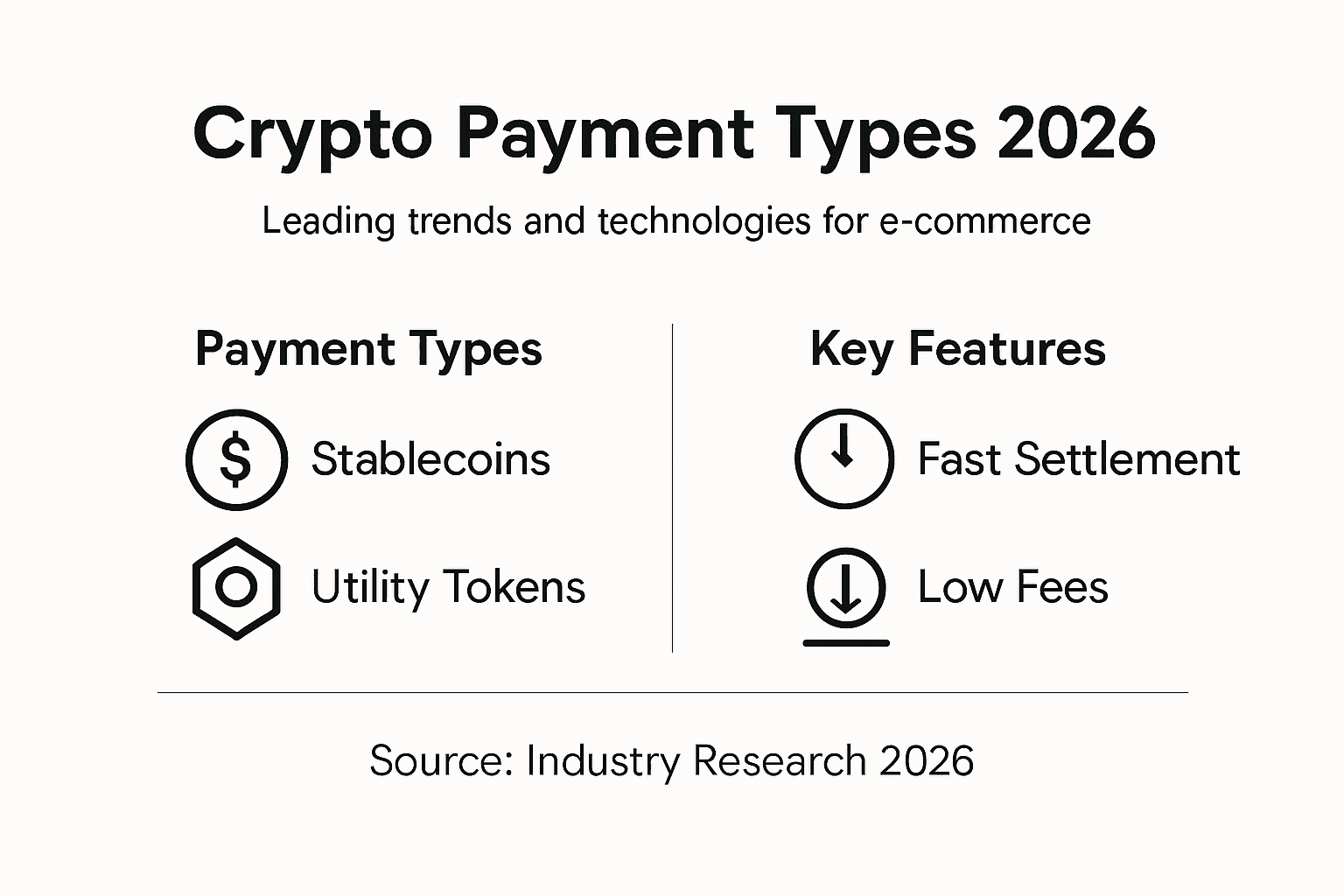
Three primary domains define the new compliance landscape: Anti-Money Laundering (AML), Know Your Customer (KYC), and Digital Asset Classification. AML regulations now require crypto platforms to implement advanced transaction monitoring systems that can detect and prevent potential financial crimes. KYC protocols have become more stringent, demanding multi-factor verification processes that verify user identities across international jurisdictions. Digital asset classification has evolved to create clear legal definitions, distinguishing between securities, utility tokens, and payment instruments with precise regulatory requirements for each category.
Technological advancements in cryptographic security have become paramount in meeting these complex regulatory demands. Advanced blockchain protocols now integrate real-time compliance checks, enabling automatic verification of transaction legitimacy and user credentials. E-commerce platforms must invest in sophisticated compliance infrastructure that can adapt quickly to changing regulatory requirements across different global markets. Automated compliance tools that leverage artificial intelligence and machine learning have become essential, allowing businesses to navigate the intricate legal landscape while maintaining operational efficiency and minimizing potential legal risks.
Pro tip: Develop a flexible compliance strategy that anticipates regulatory changes and integrates adaptive technologies to ensure continuous alignment with evolving global standards.
Reducing Transaction Costs with Automation
Cryptocurrency payment automation has become a critical strategy for e-commerce platforms seeking to minimize operational expenses and maximize transaction efficiency. By leveraging advanced blockchain business wallets, companies can dramatically reduce traditional payment processing costs associated with manual reconciliation, currency conversion, and cross-border transactions. The integration of intelligent automation technologies enables businesses to streamline financial operations, eliminate redundant intermediary fees, and create more transparent, cost-effective payment ecosystems.
Three primary automation technologies drive transaction cost reduction in 2026: Smart Contract Settlements, Algorithmic Fee Optimization, and Real-Time Transaction Routing. Smart contract settlements automatically execute predefined payment conditions without human intervention, reducing administrative overhead and eliminating manual processing expenses. Algorithmic fee optimization dynamically analyzes blockchain network conditions to select the most cost-effective transaction routes, minimizing gas fees and transfer costs. Real-time transaction routing intelligently channels payments through the most efficient networks, ensuring rapid settlements while maintaining minimal transaction expenses.
The technological infrastructure supporting automated crypto payments relies on advanced machine learning algorithms and sophisticated blockchain protocols. These systems continuously analyze transaction patterns, predict network congestion, and automatically select the most economical payment channels. E-commerce platforms can now implement multi-layered automation strategies that adapt in real-time to changing market conditions, network fees, and currency exchange rates. By integrating artificial intelligence with blockchain technologies, businesses can create self-optimizing payment systems that consistently reduce operational costs and improve overall financial efficiency.
Pro tip: Implement automated payment routing algorithms that dynamically adjust transaction paths based on real-time network conditions to maximize cost savings and transaction speed.
Risks, Costs, and Best Practices for Merchants
Cryptocurrency payment adoption requires strategic navigation of complex financial landscapes, with merchant crypto payment strategies becoming increasingly sophisticated in 2026. E-commerce platforms must carefully balance the potential benefits of digital asset transactions against inherent technological and financial risks. Understanding the nuanced challenges of crypto payments is crucial for businesses seeking to leverage these innovative financial technologies while maintaining operational stability and financial predictability.
Merchants face four primary risk categories in cryptocurrency transactions: Volatility Risk, Regulatory Compliance, Security Vulnerabilities, and Transaction Complexity. Volatility risk remains the most significant challenge, with cryptocurrency values potentially fluctuating dramatically within minutes. Regulatory compliance demands comprehensive understanding of evolving legal frameworks across different jurisdictions. Security vulnerabilities require robust technological infrastructure to prevent potential fraud and unauthorized transactions. Transaction complexity necessitates advanced technical knowledge to manage multiple blockchain protocols and digital asset conversions effectively.
Successful cryptocurrency payment integration demands a multi-layered risk mitigation strategy. Merchants should implement dynamic pricing mechanisms that instantly convert crypto payments to stablecoins or fiat currencies, minimizing exposure to market fluctuations. Advanced payment processors with real-time settlement capabilities can provide immediate currency conversion, effectively neutralizing volatility risks. Comprehensive wallet security protocols, including multi-signature authentication and cold storage solutions, become essential for protecting digital assets. Additionally, businesses must invest in continuous staff training to understand emerging blockchain technologies and maintain compliance with rapidly changing regulatory standards.
Pro tip: Implement a hybrid payment strategy using stablecoins and automated conversion tools to minimize cryptocurrency volatility and ensure consistent revenue streams.
Unlock Seamless Crypto Payments and Smart Automation for Your E-commerce Business
The 2026 crypto payment landscape demands powerful tools that manage volatility risk, enable instant crypto-fiat settlements, and ensure strong compliance. If you want to reduce transaction costs, automate payments, and accept multiple cryptocurrencies without complexity, your business needs a trusted platform that brings these innovative features together. The article highlights crucial challenges such as stability, security, and regulatory compliance—all core areas where Bankto.io delivers robust solutions. From automated payment routing to multi-currency wallets and real-time settlements, our fintech platform empowers you to scale globally with confidence.
Discover how Bankto.io’s secure wallets, crypto gateways, and fiat on-off ramps can transform your payment infrastructure and eliminate frustrations caused by volatile markets and slow conversions. Don’t let complexity or high fees hold your business back. Visit Bankto.io today to streamline crypto payment processing and leverage automation designed for e-commerce success. Take the next step to future-proof your payments and seize the opportunities of the evolving crypto economy now.
Frequently Asked Questions
What are the core technologies driving crypto payments in 2026?
The core technologies include blockchain for decentralized transaction records, cryptographic protocols for security, and smart contracts for automating payment processes without intermediaries. Together, these technologies enhance transaction speed and cost-effectiveness compared to traditional banking systems.
How do stablecoins impact e-commerce transactions?
Stablecoins provide price stability by being pegged to traditional currencies, making them ideal for commercial transactions. They help reduce transaction fees, minimize currency conversion costs, and enable instantaneous cross-border payments, enhancing overall transactional efficiency.
What are the main types of crypto payment technologies available for businesses?
The main types include Native Blockchain Currencies (like Bitcoin), Stablecoins, Utility Tokens (for accessing platform services), and Payment Tokens (for optimizing transactions). Each type serves different purposes and offers unique benefits to businesses in managing payments.
How can businesses mitigate risks associated with cryptocurrency payments?
Businesses can mitigate risks by implementing dynamic pricing mechanisms that convert crypto payments to stablecoins or fiat immediately, utilizing advanced payment processors for real-time settlements, ensuring robust wallet security protocols, and providing staff training on blockchain technologies and compliance standards.